
Nicotine Pouches
Nicotine pouches (often called “white snus”) are small, pre-portioned, 100% tobacco-free pouches placed under the upper lip to deliver nicotine through the gums. Popularized globally by brands like ZYN, VELO, and ON!, they look and feel like traditional snus but contain no tobacco leaf or stem.
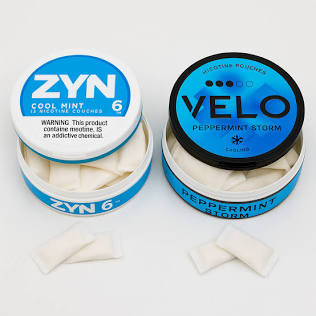
What’s Inside a Pouch?
Unlike traditional tobacco snus, nicotine pouches are filled with food-grade white powder:
- Nicotine: Extracted from tobacco leaves or synthetically manufactured in a lab (nicotine salts).
- Plant-Based Fillers: Microcrystalline cellulose or eucalyptus fibers that give the pouch its shape and bulk.
- Flavorings & Sweeteners: Food-grade flavor extracts (mint, fruit, citrus) and artificial sweeteners like xylitol or acesulfame K.
- pH Adjusters: Sodium carbonate to optimize the alkalinity so nicotine absorbs efficiently through the oral mucosa.
How They Work
Tuck: The user places a single pouch between the upper lip and gum.
- Release: Saliva activates the pouch, releasing flavor and nicotine over 20 to 45 minutes.
- Absorb: Nicotine diffuses directly through the tissue into the bloodstream, avoiding the lungs entirely.
- Dispose: Once finished, the pouch is discarded in trash (most cans include a top compartment for used pouches). No spitting required.
Key Differences: Nicotine Pouches vs. Traditional Snus
| Feature | Nicotine Pouches (White Snus) | Traditional Swedish Snus |
| Tobacco Content | 0% (Tobacco-Free) | 100% Ground Tobacco |
| Teeth Staining | None (pure white powder) | Potential staining over time |
| Refrigeration Needed? | No (shelf-stable) | Recommended to maintain moisture |
| Regulatory Status | Legal across US, EU, and UK | Banned across most of the EU (except Sweden) |
Health & Safety Context
- Harm Reduction: Free from combustion, tar, carbon monoxide, and tobacco-specific nitrosamines (TSNAs), making them significantly less harmful than smoking cigarettes or using dipping tobacco.
- Risks: Nicotine itself is highly addictive. Side effects can include localized gum irritation, mouth dryness, increased heart rate, elevated blood pressure, and nausea if the strength is too high for the user’s tolerance.